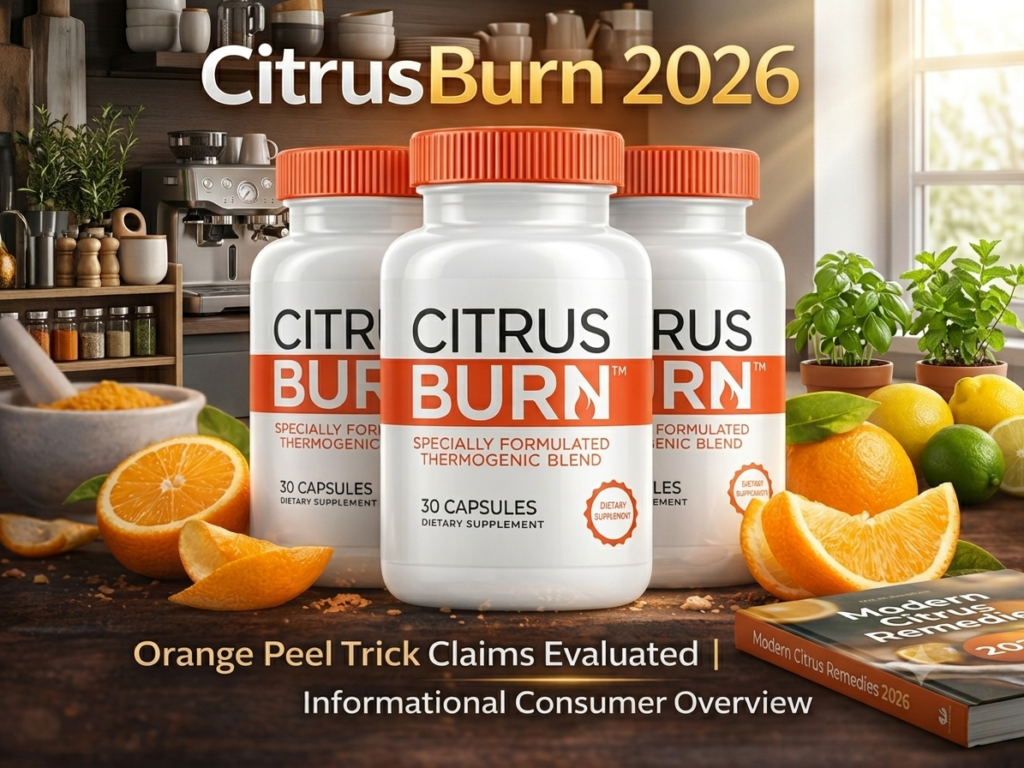
CitrusBurn is a dietary supplement marketed to adults — particularly those over 35 — who are looking for natural support with weight management, energy levels, and metabolic function. It is formulated with a blend of seven plant-based ingredients and is positioned as a stimulant-free alternative to conventional weight-loss products. This article examines what CitrusBurn is, how it is intended to work, what the research says about its key ingredients, and where its limitations lie — so you can make an informed decision before considering it.
> Disclaimer: This article is for informational purposes only and does not constitute medical advice. These statements have not been evaluated by the Food and Drug Administration. CitrusBurn is not intended to diagnose, treat, cure, or prevent any disease. Always consult a qualified healthcare provider before starting any new supplement.
—
What Is CitrusBurn?
CitrusBurn is a capsule-form dietary supplement manufactured in the United States. According to its product materials, it contains a proprietary blend of botanicals selected for their potential role in supporting the body’s natural metabolic processes — specifically a process called thermogenesis, which refers to the body’s generation of heat and its associated calorie-burning activity.
The product is marketed primarily to men and women who feel that their metabolism has slowed, particularly after the age of 35 or 40, and who are seeking a non-stimulant, plant-based option to complement their wellness routine. The manufacturer describes it as non-GMO, gluten-free, and free from habit-forming compounds or harsh stimulants.
It is sold as a dietary supplement, which means it is regulated differently from pharmaceutical drugs. The FDA does not evaluate or approve dietary supplements for safety and efficacy before they reach the market in the same way it does for prescription medications.
—
How It Is Intended to Work
The central mechanism CitrusBurn is marketed around is thermogenesis — the physiological process by which the body converts stored energy into heat. Supporters of thermogenic supplementation argue that certain botanical compounds can mildly stimulate this process, potentially leading to a modest increase in calorie expenditure over time.
The manufacturer specifically highlights a concept they call “thermogenic resistance,” suggesting that metabolic slowdown is not purely a result of diet or lifestyle choices, but may also be influenced by how efficiently the body can enter and sustain thermogenic states. They claim that certain ingredients in CitrusBurn — notably p-synephrine from Seville orange peel — may help support this function.
It is important to note that the concept of “thermogenic resistance” as described on the product’s marketing materials is not a formally recognized clinical diagnosis in mainstream medicine. While metabolic changes do occur with age, the specific framing used in CitrusBurn’s marketing represents the manufacturer’s interpretation of existing research, not a universally accepted medical framework. Consumers should approach such claims with appropriate skepticism.
Additionally, some ingredients in the formula are included for their potential role in appetite regulation and blood sugar support, which may indirectly contribute to a calorie-managed lifestyle.
—
Common Ingredients and What Research Says
CitrusBurn lists seven primary botanical ingredients. Below is a neutral review of each, drawing on publicly available research.
1. Seville Orange Peel (p-Synephrine)
Seville orange (Citrus aurantium), commonly known as bitter orange, contains an alkaloid called p-synephrine. This compound has been the subject of several human clinical studies. A 2012 review published in the International Journal of Medical Sciences (Stohs et al.) concluded that p-synephrine may modestly support metabolic rate and thermogenesis. A separate review in Obesity Reviews (Haaz et al., 2006) noted some association with weight-related outcomes, though authors called for more rigorous trials. Importantly, p-synephrine is structurally related to ephedrine (a compound banned in supplements), but current evidence suggests it has a different cardiovascular profile when used alone. That said, individuals with heart conditions or hypertension should exercise particular caution and consult a doctor before use.
2. Apple Cider Vinegar (Spanish Red Apple Vinegar)
Vinegar, and specifically apple cider vinegar, has been studied for its potential effects on satiety and blood sugar response. A 2009 study published in Bioscience, Biotechnology, and Biochemistry (Kondo et al.) found that daily vinegar intake was associated with modest reductions in body weight and body fat mass in obese subjects over a 12-week period. A 2004 study in Diabetes Care (Johnston et al.) suggested that vinegar may improve insulin sensitivity when consumed with a high-carbohydrate meal. The effects observed in these studies were generally small in magnitude and may not be representative of all populations.
3. Red Pepper Extract (Capsaicinoids)
Capsaicinoids — the active compounds in chili peppers — have been fairly well-studied in the context of metabolism. A 2012 systematic review in Appetite (Whiting et al.) found that capsaicinoids may contribute to modest increases in energy expenditure and reductions in appetite, though effects varied across studies and were often described as clinically modest. A 2015 review in Open Heart (McCarty et al.) suggested potential metabolic and vascular benefits. It is worth noting that red pepper extracts can cause gastrointestinal discomfort in some individuals, particularly at higher doses.
4. Ginger (Himalayan Mountain Ginger)
Ginger has been studied for potential effects on thermogenesis and satiety. A 2012 study in Metabolism (Mansour et al.) found that ginger consumption may enhance the thermic effect of food and support feelings of fullness in overweight men. A 2018 study in Nutrients (Kim et al.) explored ginger’s potential role in fat tissue regulation in animal models. While these findings are promising, much of the stronger evidence comes from small-scale human studies or animal research, and larger, longer-term human trials are needed before firm conclusions can be drawn.
5. Green Tea Extract (Ceremonial Green Tea)
Green tea extract, particularly its active compound EGCG (epigallocatechin gallate), is one of the more extensively studied botanical ingredients for metabolic support. A 2009 meta-analysis in the International Journal of Obesity (Hursel et al.) found a statistically significant, though modest, effect on weight loss and weight maintenance. A 2006 study in the Journal of Medicinal Food (Shixian et al.) explored EGCG’s potential to support thermogenesis via enzyme inhibition. Green tea extract is generally considered safe at moderate doses, but high doses have been associated with liver-related adverse events in rare cases.
6. Berberine
Berberine is a plant-derived compound found in several herbs and has been investigated for its potential effects on blood sugar regulation and metabolic function. Some research suggests it may activate AMPK, an enzyme involved in energy metabolism. However, berberine can interact with certain medications, including diabetes drugs and blood thinners, and should not be taken without medical supervision in individuals managing chronic health conditions.
7. Korean Red Ginseng
Korean red ginseng has a long history of use in traditional medicine and has been the subject of modern research exploring potential effects on energy, hormonal balance, and metabolic function. Evidence is mixed, and study quality varies considerably. It may interact with some medications, including blood thinners and immunosuppressants.
—
Potential Benefits (Framed Cautiously)
Based on the available research on its individual ingredients, CitrusBurn may offer the following potential support — though it is important to emphasize that individual results will vary significantly, and no outcome is guaranteed:
None of these potential benefits represent certainties, and many studies are short-term, small-scale, or conducted in specific populations that may not reflect the general public.
—
Possible Drawbacks and Limitations
As with any supplement, CitrusBurn has potential limitations and considerations that consumers should be aware of:
—
Who Should Not Use It
CitrusBurn may not be appropriate for everyone. The following individuals should consult a licensed healthcare provider before considering this or any similar supplement:
—
Frequently Asked Questions
Q: Is CitrusBurn a prescription medication?
No. CitrusBurn is a dietary supplement, not a prescription drug. It is not subject to the same pre-market evaluation process that applies to pharmaceutical medications. This means its safety and efficacy have not been formally reviewed or approved by the FDA. As with any supplement, consulting a healthcare professional before use is advisable.
Q: Do I need to change my diet or exercise routine while taking CitrusBurn?
The manufacturer does not appear to require dietary or exercise changes as a condition of use. However, it is widely understood in the scientific and medical community that dietary supplements for weight management tend to produce more meaningful outcomes when used alongside a balanced diet and regular physical activity. Relying solely on a supplement without addressing lifestyle factors is unlikely to produce lasting results for most people.
Q: How long would I need to take CitrusBurn to notice any difference?
The manufacturer recommends multi-bottle supplies and suggests consistent use over time, which is common with botanical supplement products. Research on individual ingredients such as green tea extract and apple cider vinegar generally involves study periods ranging from a few weeks to several months. Individual timelines will vary, and some people may not notice a meaningful difference. There is no universally guaranteed timeframe.
Q: Where can I find pricing and purchasing information for CitrusBurn?
Pricing, package options, and purchasing details are available exclusively on the official CitrusBurn website. This article does not include pricing information, as costs and promotional availability may change. Consumers are encouraged to review the current terms, including the refund policy, directly on the official product page before making any purchasing decision.
—
Bottom Line
CitrusBurn is a plant-based dietary supplement that aims to support metabolic function, appetite regulation, and energy levels using a blend of seven botanical ingredients. Several of those ingredients — including Seville orange peel (p-synephrine), green tea extract, apple cider vinegar, and ginger — have a meaningful body of published research behind them, though the effects documented in studies tend to be modest and are not guaranteed to translate uniformly across all individuals.
The product is marketed primarily to adults over 35 who feel they are experiencing a metabolic slowdown and are seeking a natural, non-stimulant option to complement their health routine. For some people, the ingredient profile may align with their wellness goals. For others — particularly those with existing health conditions or those taking medications — the risks of certain ingredients may outweigh potential benefits.
As a consumer, it is worth approaching any supplement with realistic expectations. No capsule alone is a substitute for consistent, evidence-based lifestyle habits. If you are considering CitrusBurn, the most prudent step is to discuss it with a qualified healthcare provider, review the ingredient list against any medications you may be taking, and visit the official product website for current purchase details and refund policy terms.
—
This article is for informational purposes only. The author is not affiliated with CitrusBurn or its manufacturer. Statements about individual ingredients are drawn from publicly available peer-reviewed research and do not constitute an endorsement of the product or a guarantee of results. These statements have not been evaluated by the Food and Drug Administration. This product is not intended to diagnose, treat, cure, or prevent any disease.
—
Full product details and current information are available on the official website.
Visit the official CitrusBurn website
We may earn a commission from this link, at no extra cost to you.
Disclosure: This article contains affiliate links. If you buy through them we may earn a commission at no extra cost to you — this does not influence our assessment. We are an independent publisher, not the manufacturer.