Disclosure: This article contains affiliate links. If you buy through them we may earn a commission at no extra cost to you — this does not influence our assessment. We are an independent publisher, not the manufacturer.
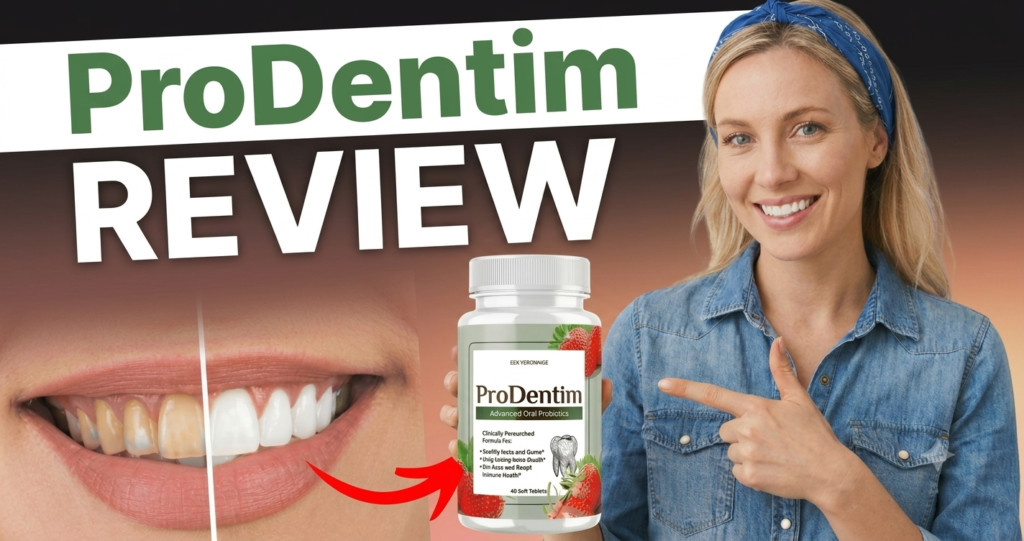
ProDentim is a chewable dietary supplement marketed toward adults who want to support their oral health through probiotic strains and select nutrients. It is sold primarily online and positioned as a complement — not a replacement — to standard dental hygiene practices. This review examines what the product contains, how it is intended to work, what the available research suggests, and where its limitations may lie.
—
What Is ProDentim?
ProDentim is a chewable tablet formulated with a blend of probiotic bacteria and a small proprietary mix of plant-derived ingredients and minerals. The manufacturer describes it as being “specially designed for the health of your teeth and gums,” with the central idea being that maintaining a healthy bacterial balance in the mouth may contribute to better overall oral wellness.
The product is marketed broadly to adults who feel that conventional dental products alone are not fully addressing their oral health concerns — for example, those dealing with recurring gum sensitivity, bad breath, or general dissatisfaction with their current oral care routine. It is not marketed as, and should not be understood as, a medical treatment for any dental disease or condition.
> Important disclaimer: This article is informational only. ProDentim is a dietary supplement. It is not intended to diagnose, treat, cure, or prevent any disease. Always consult a licensed dentist or physician before adding any supplement to your routine, especially if you have an existing dental or medical condition.
—
How It Is Intended to Work
The premise behind ProDentim draws on an emerging area of research known as the oral microbiome — the complex community of bacteria that naturally live in the mouth. Some scientific literature does suggest that a diverse and balanced oral microbiome may be associated with better gum and tooth health, though the field is still developing and cause-and-effect relationships are not yet firmly established for most probiotic interventions.
ProDentim’s manufacturer references a study published in a Springer Nature journal suggesting that individuals with healthy teeth tend to have higher populations of beneficial bacteria in the mouth. From this premise, they argue that replenishing the mouth with beneficial bacterial strains — through a chewable probiotic — may help support a healthier oral environment.
It is worth noting that:
- The scientific community has not reached consensus that oral probiotic supplements reliably reproduce these effects in all individuals.
- Chewing the tablet (rather than swallowing a capsule) is intended to allow the probiotic strains to interact with the oral cavity directly.
—
Common Ingredients and What Research Says
Below is a neutral summary of ProDentim’s listed ingredients and what publicly available research generally suggests about each. Note that ingredient-level research does not automatically confirm the same effects in a finished, combined product.
Lactobacillus Paracasei
A probiotic strain that has been studied in the context of oral health. Some research, including a study cited in NutraIngredients (2014), suggests it may offer benefits related to gum health and could play a role in inhibiting certain harmful oral bacteria. Evidence is preliminary and not universally conclusive.
B. Lactis BL-04®
A registered strain of Bifidobacterium animalis subsp. lactis. Research has explored this strain’s potential role in supporting respiratory health and immune function, as well as maintaining microbial balance in the upper digestive and oral tract. Some clinical trials show promising results, though oral-specific data remains limited.
Lactobacillus Reuteri
One of the more studied oral-health probiotics. A 2018 review in Frontiers in Microbiology noted L. reuteri‘s potential anti-inflammatory properties and its possible role in supporting a balanced oral environment. A study noted in NutraIngredients-LATAM (2019) suggested some oral health benefits even from non-live forms of this bacterium — though researchers caution that results vary.
Inulin
A prebiotic dietary fiber derived from plants. Inulin is understood to act as a food source for beneficial bacteria, potentially helping probiotic strains survive and flourish. It does not itself provide probiotic activity.
Malic Acid (from Strawberries)
Malic acid is a naturally occurring organic acid. Some consumer-focused sources suggest it may help maintain surface tooth brightness, though strong peer-reviewed evidence specifically supporting malic acid’s whitening effect in a supplement form is limited.
Tricalcium Phosphate
A calcium mineral compound. Calcium and phosphate are well-known components of tooth enamel. Some research supports the role of calcium phosphate compounds in remineralization processes, though this is better studied in topical dental products (such as toothpaste) than in orally consumed supplements.
Peppermint
Peppermint has a long history of use in oral care products. Some research suggests it may have mild antibacterial and anti-inflammatory properties. A study in the Journal of Arak University of Medical Sciences (2020) examined the inhibitory effects of peppermint essential oil on periodontal pathogens, with encouraging but not definitive findings.
—
Potential Benefits (Framed Cautiously)
Based on the general research landscape around oral probiotics and the ingredients in ProDentim, the following potential benefits are sometimes associated with this category of product. These are not guarantees, and individual results may vary considerably:
Important caveat: The phrase “may” is used deliberately throughout this section. The FDA has not evaluated ProDentim’s claims. No supplement in this category has been proven to replace professional dental care or treat dental disease.
—
Possible Drawbacks and Limitations
A balanced review requires transparency about limitations. Consumers should be aware of the following:
—
Who Should Not Use It
ProDentim, like all dietary supplements, is not appropriate for everyone. The following groups should consult a qualified healthcare provider before using this or any similar product:
—
Pricing and Where It Is Sold
ProDentim is sold primarily through its official website. The product appears to be available in multiple supply sizes, with larger orders offered at a lower per-bottle cost and potentially including free bonus digital content.
For current and accurate pricing, available package options, and any active promotions, please check the official ProDentim website directly. We do not list specific prices here, as supplement pricing can change frequently and we cannot guarantee that any figure quoted would remain accurate at the time you read this article.
A 60-day money-back guarantee is stated on the product’s official sales page. As with any satisfaction guarantee, consumers are advised to read the full refund policy terms and conditions before purchasing to understand any conditions or limitations that may apply.
ProDentim does not appear to be sold through major retail chains or traditional pharmacies at this time, though availability may evolve.
—
Frequently Asked Questions
Q: Is ProDentim a replacement for brushing and flossing?
No. The manufacturer does not position it as such, and it should not be used that way. ProDentim is a dietary supplement intended to potentially complement — not replace — standard oral hygiene practices, including brushing twice daily, flossing, and routine professional dental visits.
Q: How long does it reportedly take to notice any effects?
The product’s materials do not specify a precise timeline, and this is consistent with most probiotic supplements. General probiotic research suggests that microbial changes, if they occur, may take several weeks of consistent use to become noticeable. Individual responses will differ based on baseline oral health, diet, and other factors.
Q: Are there any known side effects?
Probiotic supplements are generally considered safe for healthy adults. Some individuals experience mild, temporary digestive changes when beginning probiotic use. Because ProDentim is chewed rather than swallowed whole, gastrointestinal effects may be less pronounced than with ingestible probiotic capsules. That said, individual sensitivities vary. Consult a healthcare provider if you experience any unusual reaction.
Q: Is ProDentim FDA-approved?
No. Like all dietary supplements sold in the United States, ProDentim is not FDA-approved. The FDA does not approve dietary supplements in the same way it does pharmaceutical drugs. Manufacturers are responsible for ensuring their products are safe, and the FDA may take action if a product is found to be unsafe or if its claims violate regulations. The product’s own website includes the standard FDA disclaimer that it is not intended to diagnose, treat, cure, or prevent any disease.
—
Bottom Line
ProDentim is an oral probiotic supplement containing a blend of three probiotic strains — Lactobacillus Paracasei, B. Lactis BL-04®, and Lactobacillus Reuteri — along with a proprietary blend of supporting ingredients including inulin, malic acid, tricalcium phosphate, and peppermint.
The concept of oral probiotics is grounded in legitimate and growing scientific interest in the oral microbiome. Some of the individual ingredients in ProDentim have preliminary research support for potential oral health benefits. However, the evidence base is not yet robust enough to make strong claims, and no product-specific clinical trials have been published for this particular formula.
ProDentim may be worth considering for healthy adults who are already maintaining solid oral hygiene habits and are interested in exploring whether a probiotic supplement might offer additional support. It is not a substitute for professional dental care, and it is unlikely to resolve serious or active dental health conditions.
As with any supplement purchase, approach with realistic expectations, review the refund policy carefully, and consult your dentist or physician if you have any existing health concerns. An honest conversation with your dental provider is always the best starting point.
—
This article is produced for informational purposes only by OptiLife Protocol. It does not constitute medical or dental advice. Individual results from any supplement will vary. This page may contain affiliate links, which means OptiLife Protocol may receive a commission if you purchase through a qualifying link, at no additional cost to you.
—
META: ProDentim review 2026: an honest, balanced look at ingredients, research, potential benefits, limitations, pricing, and who should avoid this oral probiotic supplement.
SLUG: prodentim-review-2026
Prices, current offers and full product details are listed on the official website.
Visit the official Prodentim website
Affiliate link.